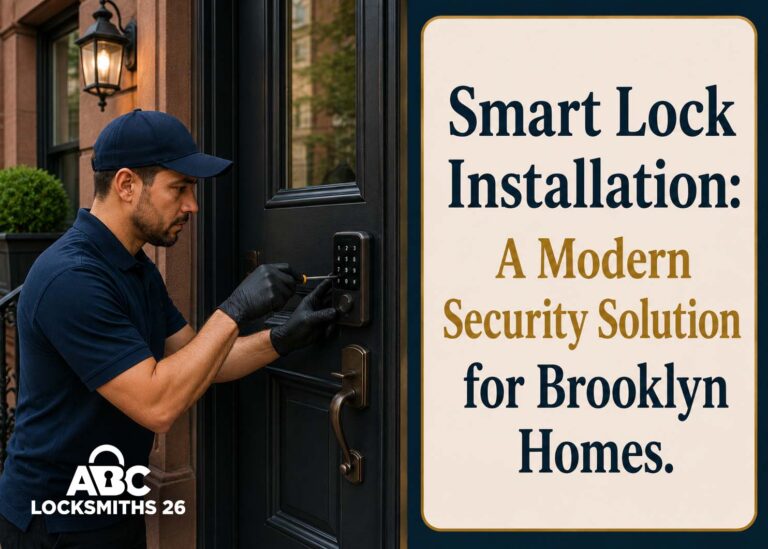
You lose your keys twice a month. Your tenant needs a spare made every time someone moves out. Your kid comes home from school before you’re back from work, and you’d rather not hide a key under the mat like it’s 1995.
That’s the situation pulling a lot of Brooklyn homeowners toward smart locks right now. Not because it’s trendy, but because keys are genuinely annoying to manage across brownstones, multi-family buildings, and rental units where people come and go.
TL;DR: Smart lock installation swaps your traditional deadbolt for a keyless system you control from your phone, a code pad, or a fob. In Brooklyn, where door types range from century-old brownstone frames to newer aluminum entry doors, professional installation matters more than the brand of lock you pick. A properly installed smart lock gives you remote access, guest codes, and entry alerts, without the recurring headache of lost keys or rekeying every time a tenant moves out.
1. What Is a Smart Lock, Really
A smart lock does one job differently than a regular lock: it replaces the physical key with something electronic. That could be a keypad code, a phone app, a fingerprint, or a fob you tap.
Most smart locks fit onto your existing door in place of a standard deadbolt. Some replace the whole lock body. Others sit on top of your current deadbolt and turn it automatically, no drilling required.
They all connect to power (usually batteries) and most connect to Wi-Fi or Bluetooth, which is how you get remote control from your phone.
2. How Smart Lock Installation Works
Installation sounds simple on paper: unscrew the old lock, screw in the new one. In practice, three things determine how smooth it goes.
Door prep. Your door needs the right bore hole size and backset distance for the lock you’ve picked. Many Brooklyn brownstones have older doors with non-standard measurements, which is where DIY kits run into trouble.
Power and connectivity setup. After the physical mount, the lock needs to be paired with your home Wi-Fi or a hub, and the app needs to be configured with your codes, users, and permissions.
Testing. A lock that looks installed but doesn’t latch properly, or drains its batteries in two weeks because of a misaligned strike plate, isn’t actually done. This step gets skipped more than it should.
Our team handles all three in one visit, which is the difference between a lock that works and a lock you’ll be calling someone about again in a month.
3. Why Brooklyn Homes Are a Different Case
Brooklyn isn’t one type of housing stock, it’s several stacked on top of each other. A pre-war brownstone in Park Slope has a solid wood door with decades of paint layers and a frame that’s settled over time. A newer condo in Williamsburg has a metal door with tighter, standardized specs. A multi-family walk-up in Bushwick might have a door that was replaced once, poorly, sometime in the last twenty years.
Each of these needs a slightly different approach. Older wood doors sometimes need re-boring or a plate adjustment before a smart lock will sit flush and seal properly. Metal doors need the right mounting hardware so the lock doesn’t rattle loose over time. Rental buildings often need a lock that a landlord can control access for without giving every tenant a master key.
This is exactly the kind of variation where a residential locksmith in Brooklyn earns their fee. A locksmith who’s fitted locks on hundreds of Brooklyn doors already knows which models sit well on a 1910 frame and which ones don’t.
4. Real Use Cases: Who Actually Needs One
Landlords with turnover. Every time a tenant moves out, you’re either paying to rekey or hoping they didn’t copy the key. A smart lock lets you delete their access code the day they leave, no locksmith visit, no new hardware.
Parents with kids who come home alone. You get a notification the moment the door unlocks after school. No more texting “did you get home ok” and waiting.
Frequent travelers or Airbnb hosts. Generate a temporary code for a guest, dog sitter, or cleaner that expires automatically. You’re not handing out a physical key you’ll never get back.
People who’ve locked themselves out one too many times. If you’ve ever stood outside your own building at 11 PM patting down every pocket, a keypad or phone unlock solves that specific problem permanently.
5. Benefits Beyond “No More Keys”
Keyless entry is the headline feature, but the real value shows up in the details.
- Access logs. You can see exactly when the door was unlocked and by which code, useful for tracking dog walkers, contractors, or family members.
- Auto-lock. The door locks itself after a set time, so a door left open by accident isn’t a security gap all night.
- Multiple entry methods. Most locks support a code, an app, and a physical backup key, so one dead phone battery doesn’t lock you out.
- Integration with smart home security. Pair the lock with a video doorbell or camera and you get a fuller picture of who’s coming and going, not just when the door opens.
6. What to Check Before You Buy
Not every smart lock is worth installing on a Brooklyn door. Before buying, check:
- Compatibility with your door type. Confirm bore hole size and backset before ordering, especially in older buildings.
- Battery life and low-battery backup. Look for at least 6 months of battery life and a backup option like a physical key or external power port.
- Connectivity type. Bluetooth-only locks need you to be near the door. Wi-Fi locks give you remote access from anywhere but rely more on your internet staying up.
- Weather resistance. If the lock is on an exterior door exposed to Brooklyn winters, check it’s rated for outdoor temperature swings.
- Landlord or co-op approval. Some Brooklyn buildings require board approval before you swap the front door hardware. Check your building rules first.
7. What Smart Lock Installation Costs in Brooklyn
Cost breaks into two parts: the lock itself and the installation.
Smart locks generally range from budget keypad models to higher-end locks with app control, fingerprint access, and video integration. Installation adds a flat labor cost on top, which covers door prep, mounting, and setup.
The number that matters more than the sticker price is what you avoid paying later: emergency lockout calls, rekeying fees after a lost key, or a return visit because a DIY install wasn’t seated correctly. A single residential smart lock installation done right the first time usually costs less over a year than the number of small locksmith calls it replaces.
For an exact quote based on your door and lock preference, it’s easier to get a free estimate than guess from a price range.
8. Smart Locks vs Traditional Deadbolts
| Traditional Deadbolt | Smart Lock | |
| Entry method | Physical key only | Code, app, fob, or key |
| Lost key fix | Rekey or replace lock | Delete the code remotely |
| Guest access | Copy a key | Temporary code, expires automatically |
| Entry tracking | None | Logs who unlocked and when |
| Power dependency | None | Needs batteries or backup power |
| Upfront cost | Lower | Higher, offset by fewer service calls |
Traditional deadbolts aren’t obsolete, they’re simple and reliable with zero dependency on batteries or apps. But for anyone managing multiple people coming through one door, a smart lock solves problems a deadbolt physically can’t.
FAQ
Can a smart lock be installed on any door, or does my door need to be a certain type?
Most doors can take a smart lock, but older wood doors in pre-war Brooklyn buildings sometimes need minor adjustments to the bore hole or strike plate first. A quick inspection tells you exactly what your door needs before installation day.
What happens to my smart lock if the power goes out or Wi-Fi drops?
Wi-Fi loss doesn’t lock you out, most smart locks still work with a code or the physical backup key even without internet. Wi-Fi is only needed for remote features like unlocking from your phone away from home.
Do I need permission from my landlord or co-op board to install a smart lock in Brooklyn?
Many co-ops and rental buildings require approval before changing exterior door hardware. It’s worth checking your building’s rules, and a locksmith can also install a version that keeps the original lock cylinder intact if that’s a requirement.
How long does smart lock installation actually take?
A straightforward install usually takes under an hour once the technician is on site. Older doors needing prep work can take a bit longer, but it’s still typically a same-visit job.
Can I keep using a physical key as backup after installing a smart lock?
Yes, most smart locks are built with a physical key override or backup entry method specifically for this. It’s a good idea to keep one working key on hand regardless of how advanced the lock is.
Ready to Make the Switch
Smart lock installation isn’t a trend you have to figure out alone. If your Brooklyn home’s due for an upgrade, or you’re just tired of managing keys for tenants, kids, or guests, our team can walk your door, recommend a lock that actually fits it, and install it right the first time. Get a free quote and we’ll take it from there.